All published articles of this journal are available on ScienceDirect.

Career Choices and Plans of Dental Students: A Cross-sectional Study in Dental Students in Jordan
 iD
iD
Authors Info & Affiliations
Abstract
Introduction
There is a growing number of dental students who are increasingly pursuing career opportunities abroad, and this area remains underexplored. This study aimed to examine the career choices and future plans of dental students in Jordan.
Methods
This cross-sectional study was conducted on dental students (N = 300) at various universities in Jordan in 2023-2024. Following ethical approval, a self-administered questionnaire was used to collect the information: dental students' career aspirations, motives for choosing dentistry, socioeconomic background, interest in dentistry, and projected career paths. The data were analyzed using SPSS 22.
Results
The study sample consisted of 192 females (64%) and 108 males (36%). A total of 153 students (51%) were enrolled in government universities, while 147 students (49%) attended private universities. Most of both female and male students reported that the decision was their own, with a notably higher number among females. Most students (200) expressed a desire to become specialists, a smaller number of students wished to become researchers, while even fewer were interested in becoming general dentists. Additionally, a small portion of students remain undecided about their future career path. A large portion, 159 students (53%), indicated that they have plans to pursue a clinical career; a significant portion, 93 students (31%), were undecided; and 48 students (16%) expressed plans not to become a clinical dentist. A total of 61 students (20.3%) expressed a preference for staying and working in Jordan after graduation. When considering international destinations, the USA was the most popular choice, with 30 students (23%) wanting to work there, followed by the UK with 24 students (18%).
Discussion
Through a comprehensive survey administered to dental students, this study also investigated various dimensions of their educational and professional lives, including their financial support for dental education, their interest in specialized fields of dentistry, and their plans for post-graduation. Furthermore, this study explored the potential implications of students' aspirations to work abroad and offers an analysis of how these trends might influence the country's dental education system and healthcare landscape.
Conclusions
Overall, personal motivation played the most significant role in the decision to pursue dentistry. The majority of the dental students are interested in working abroad in developed nations such as the USA, UK, Australia, Germany, Canada, and the Gulf nations. Most students expressed a desire to become specialists, a smaller number of students expressed their desire to become researchers, while even fewer were interested in becoming general dentists. Additionally, a small portion of students remained undecided about their future career path.
1. INTRODUCTION
Career choice in dentistry is a complex and multifaceted process influenced by a wide range of personal, social, and professional factors. It not only determines an individual’s professional development and financial stability but also impacts lifestyle, work–life balance, and long-term satisfaction [1]. Gaining an understanding of students’ motivation and confidence in choosing and continuing dental education is crucial [2-4]. The motivations behind students’ decisions to pursue dentistry as a career are not well documented, particularly in developing nations. Variations in students’ social, economic, and cultural backgrounds are likely to influence their future professional career choices in dentistry [5-10].
The students’ confidence in their career choice is closely linked to academic performance, professional identity formation, and long-term retention within the profession. A mismatch between expectations and the realities of dental practice may contribute to stress, burnout, or attrition during training or early professional life. By identifying the social and educational factors that influence motivation and confidence, dental schools can design curricula, mentoring systems, and career guidance programs that better support students’ psychological well-being and professional growth throughout their education.
Finally, exploring the influence of socioeconomic and cultural backgrounds on career choice has broader implications for equity and diversity within dentistry [11, 12]. Students from different backgrounds may face distinct challenges, expectations, and pressures that shape their decision-making processes and career trajectories. Providing support and career guidance, especially in underserved regions, can help students make informed decisions that align with their personal and professional goals [13, 14]. Furthermore, recognizing these differences can inform more inclusive admission policies, financial support mechanisms, and educational environments. The factors that impacted the choice were helping others, socioeconomic factors, and the influence from family on the choice [2, 4]. Ultimately, a deeper understanding of dental students’ motivations and career-related confidence can contribute to producing a resilient, motivated, and socially responsive dental workforce capable of meeting evolving oral healthcare demands.
Jordan, a small, beautiful kingdom in the Middle East, has long been recognized as a hub for dental education, fostering a strong pool of dental professionals who are expected to be future leaders in the country's oral healthcare sector. The nation's commitment to high-quality dental education is reflected in its diverse array of institutions, both public and private, offering comprehensive undergraduate and specialized dental programs. Leading public universities, such as the University of Jordan, Jordan University of Science and Technology, and Yarmouk University, are at the forefront, providing students with rigorous academic and clinical training. Private institutions like Zarqa'a University, Petra University, Ibn Sina University for Medical Sciences, and Aqaba Medical Sciences University further contribute to expanding the educational options available to prospective dental professionals.
In response to the demands of globalization and evolving economic dynamics, a growing number of Jordanian dental students have expressed aspirations of pursuing professional opportunities abroad, particularly in high-income regions such as the United States, Europe, and the Gulf countries (UAE, Qatar, and Saudi Arabia). This trend is largely driven by the disparity in salaries and career advancement opportunities between dentists in Jordan and those in developed nations. As a result, the country faces a challenge in retaining its highly trained dental workforce, which has significant implications for the future of dental care and education in Jordan.
The career choices and future plans of dental students shape their academic and professional trajectories [15, 16]. The career motivations and intentions of dental students provide a better understanding of their role in society and contribute to debates on dental education and practice [17]. This study will also help identify dental students’ career expectations. This cross-sectional study aimed to study the career choices and future plans of dental students in Jordan. This study was conducted in Jordan to study the details of the students' personal backgrounds, including their academic experiences, familial influences, and career goals. This research seeks to provide valuable insights into the underlying factors shaping the career paths of dental students in Jordan.
2. MATERIALS AND METHODS
2.1. Study Design
This descriptive cross-sectional study was conducted in 2023-2024 in various universities in Jordan. The study used convenience sampling to select participants from different Universities.
2.2. Study Sampling and Study Samples
The study sample consists of dental students from various dental schools in Jordan in Years 1-5. A total of 300 dental students were recruited for this study from various dental/medical universities in Jordan using convenience sampling. The age of the participants was 18-26 years old, including both males and females. The selection criteria were:
Inclusion criteria:
- Dental students in Jordan.
- Age 18-26 years old.
- Both males and females.
Exclusion criteria:
- Dental students aged above 26 years.
- Not willing to participate in the research.
The sample size was calculated using G*Power Software, with an effect size of 0.3, α = 0.05, and a power of the study of 95%. The calculated sample size was 220. However, 300 participants were selected to increase the sample size.
2.3. Ethical Approval and Consent to Participate
Ethical approval was obtained from the Ethical Committee of the Faculty of Dentistry, Zarqa University, Jordan (approval number 2462). Written consent was obtained before survey participation. Participation was voluntary, and personal identifiers were excluded to maintain privacy.
2.4. Questionnaire
A self-administered questionnaire was developed to cover demographic data, dental health knowledge, student attitudes towards dentistry, family background, future career preferences, and interest in studying abroad as a target destination after graduation. The survey was conducted via Google Forms. This questionnaire was validated with 3 full professors at the University before being used in the research.
3. RESULTS
The study sample consisted of 300 dental students, with 192 females (64%) and 108 males (36%), reflecting a higher proportion of female participants, as shown in Table 1. Regarding marital status, most participants were single: 296 students (98.7%) were unmarried, and only 4 (1.3%) were married. In terms of university type, 153 students (51%) were enrolled in government universities, while 147 students (49%) attended private universities, indicating a nearly equal distribution between public and private institutions. The students were also spread across different years of the dental program, with the largest group in their first year (118 students, 39.3%), followed by 69 students (23.0%) in their second year, and 60 students (20.0%) in their third year. There were 26 students (8.7%) in their fourth year and 27 students (9.0%) in their fifth year, indicating balanced representation across various stages of the program.
| Details | Number (%) |
|---|---|
| Gender • Male • Female |
108 males (36%) 192 females (64%) |
| Marital status • Unmarried • Married |
296 students (98.6%) 4 students (1.4%) |
| University type • Government • Private |
153 students (51%) 147 students (49%) |
| Year of study • First year • Second year • Third year • Fourth year • Fifth year |
118 students (39.3%) 69 students (23%) 60 students (20%) 26 students (8.7%) 27 students (9%) |
| University • University of Jordan • Zarqa University • Ibn Sina University for Medical Sciences • Petra University • Jordan University of Science and Technology • Others (Aqaba Medical Sciences University, Al-Ahliyya Amman University, Aqaba Medical Sciences University). |
140 students (47%) 100 students (33.3%) 20 students (6.7%) 15 students (5%) 15 students (5%) 10 students (3%) |
Among the universities, the largest group of students, 140 (47%), attended the University of Jordan, followed by 100 students (33.3%) from Zarqa University, 20 students (6.7% from Ibn Sina University for Medical Sciences, 15 students (5%) from Petra University, and 15 students (5%) from Jordan University of Science and Technology. Other Universities included only 10 students (3%) from Aqaba Medical Sciences University and Al-Ahliyya Amman University.
The profession of the father and mother of the participants is shown in Table 2. The professions of the fathers of dental students varied widely, with the most common being engineers (25.3%), followed by medical doctors (13.3%), dentists (10.7%), other health professionals (21.7%), teachers (9.3%), business owners (9.7%), and other professions (10%). While the profession of mothers of dental students was diverse, with teaching being the most common (30.3%), followed by health professionals (19%), engineers (12.7%), medical doctors (8%), dentists (4.7%), housewives (20.3%), and other professions (5%).
| Professions | Number (%) |
|---|---|
| Father’s profession • Engineer • Medical doctor • Dentist • Other health professionals • Teacher • Business owner • Others |
76 (25.3%) 40 (13.3%) 32 (10.7%) 65 (21.7%) 28 (9.3%) 29 (9.7%) 30 (10%) |
| Mother’s profession • Teacher • Engineer • Medical doctor • Dentist • Other health professional • Housewive • Others |
91 (30.3%) 38 (12.7%) 24 (8%) 14 (4.7%) 57 (19%) 61 (20.3%) 15 (5%) |
The results of the questionnaire in the dental career are shown in Figs. (1 to 7). On the question “Who influenced your decision to study dentistry?”, the majority of the students answered Own (227, 76%), Family (63, 20%), Relatives (5, 2%), and Friend (5, 2%) (Fig. 1). The distribution of responses was not evenly distributed and was highly statistically significant (P-value <0.0001).
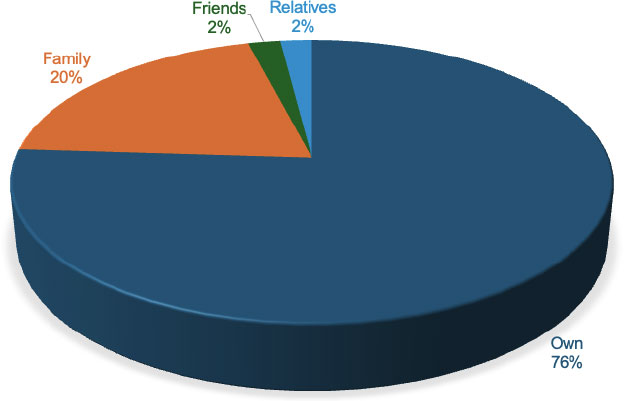
Reasons for choosing dentistry.
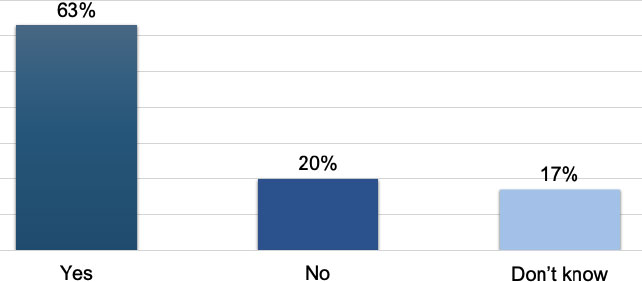
Interest in dentistry before entering dental school.
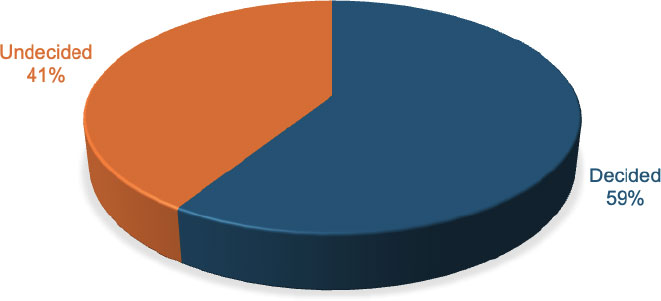
Students’ plans after graduation.
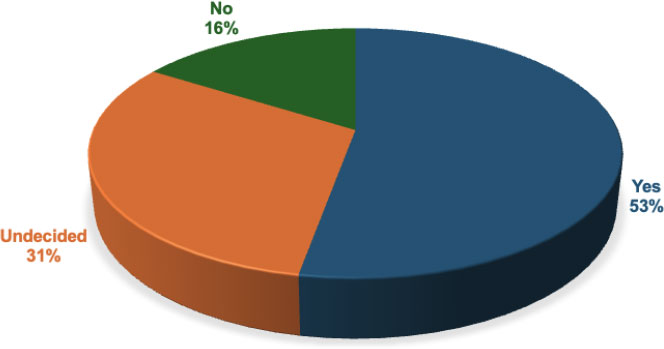
Students’ plan to become a clinician after graduation.
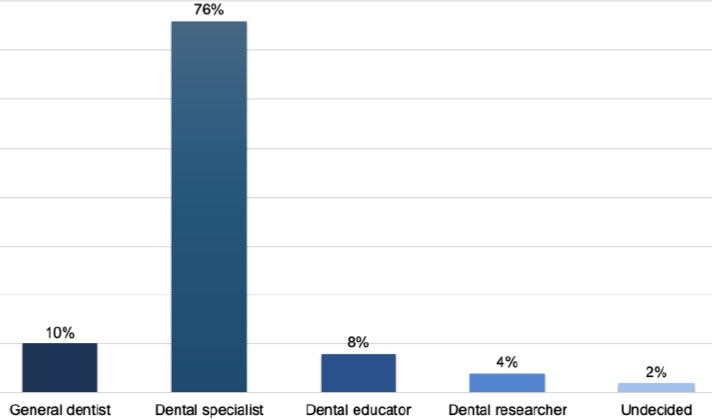
Dental students' preferences for the type of dentist.
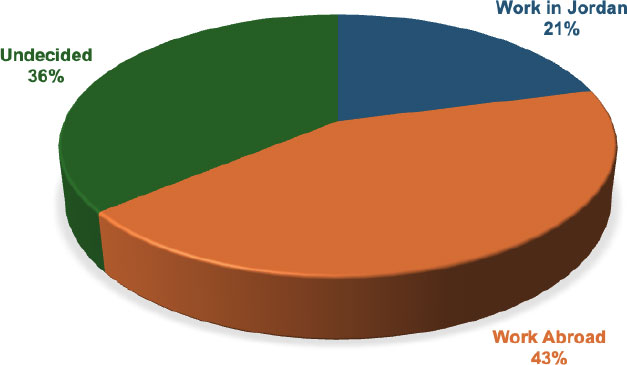
Students’ preference for the workplace after graduation.
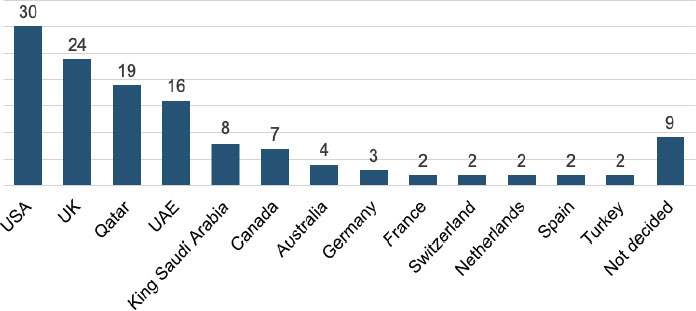
Students’ preferred country to work as a dentist after graduation.
On the question “Do you have an interest in dentistry before entering dental school?”, the majority of the students answered “Yes” (189, 63%), “No” (59, 20%), and “Don’t know” (52, 17%) (Fig. 2). The results showed that there was a statistically significant difference (P-value <0.0001) among the responses. The majority of students who had an interest in dentistry before enrolling (“Yes”) have made decisions about their future. Fewer students without prior interest in dentistry (“No”) have made decisions, and more of them remain undecided. The “Don’t know” category was more prominent among students who were unsure about dentistry before starting their studies. Furthermore, regarding who influenced male and female dental students to study dentistry. Most of both female and male students reported that the decision was their own, with a notably higher number among females. Family influence was the second most common factor for both sexes, with similar counts for males and females. Very few students cited friends or relatives as influential in their decision, with these categories showing minimal representation across both genders. Overall, personal motivation played the most significant role in the decision to pursue dentistry.
Regarding what to do after finishing graduation, 178 (59%) students have decided, and 122 (41%) are undecided yet (Fig. 3). The difference between decided and undecided was statistically significant (P-value = 0.0012).
Similarly, Fig. (4) shows the plans of dental students after graduation regarding whether they plan to pursue a clinical dental career. A large portion, 159 students (53%), indicated that they have plans to pursue a clinical career, and a significant portion, 93 students (31%), were undecided, and 48 students (16%) expressed plans not to become a clinical dentist. The difference among the three responses was highly statistically significant (P-value <0.0001). Overall, students with prior interest in dentistry are more likely to pursue clinical careers, while undecided and “No” interest students lean toward non-clinical options.
Furthermore, Fig. (5) shows the dental students' preferences for the type of dentist they would like to become. The majority of the students (228, 76%) expressed a desire to become dental specialists. A smaller number of students wish to become general dentists (30, 10%) and dental educators (24, 8%), while even fewer are interested in becoming dental researchers (12, 4%). Finally, a small portion of students (6, 2%) remain undecided about their future career path.
Figure 6 shows the preference for the workplace after graduation. The data reveal that 61 students (20.3%) expressed a preference for staying and working in Jordan after graduation, while 130 students (43%) expressed a preference for working abroad after graduation. In contrast, 109 students (36.3%) were undecided about their future work location, which highlights a significant uncertainty among the participants regarding their career paths. When considering other destinations for work, out of 130 students, 30 students (23%) chose the USA as the most popular choice and wanted to work there, followed by the UK with 24 students (418%) (Fig. 7). Other preferred countries were Qatar (15%), UAE (12%), KSA (6%), Canada (5%, Australia (3%), and Germany (2%). A few designated countries were France, Switzerland, the Netherlands, Spain, Turkey, and undecided (7%).
4. DISCUSSION
The factors influencing students’ choice of dentistry as a career are more evident in developing countries. This study assessed the different parameters, like reasons for preferring dentistry, family background, interest in dentistry before and after joining the dental university, and the prospects of young dentists for their future career after graduation. This study also analyzed the academic and professional trajectories of dental students in Jordan, with a specific focus on the factors influencing their decision to pursue dentistry, the motivations behind their career choices, and their future professional aspirations. In addition, this study also investigated various aspects of their educational and professional lives, including their financial support for dental education, their interest in specialized fields of dentistry, and their plans for post-graduation. Contributing to understanding these factors, this research aimed to inform future educational policies, career counseling strategies, and workforce development initiatives in the field of dentistry, not only in Jordan but also across the broader Middle Eastern region. Such insight can help universities in developing more effective admission strategies and policies [18].
Furthermore, understanding the factors that shape dental students’ career choices has important implications for workforce planning and health policy to anticipate future trends in the dental workforce, including preferences for specialization, geographic distribution, and sector of practice [16]. In developing countries, where disparities in access to oral healthcare remain substantial, aligning students’ career aspirations with national oral health needs is particularly critical. Insight into these motivations may support the development of targeted strategies to encourage service in underserved or rural areas, to address workforce shortages and reduce workforce imbalances [19].
Students' reasons for pursuing careers in the dentistry profession are a key focus for educators and admissions committees [20]. The motivations behind choosing dentistry, along with the admission criteria and selection methods, differ significantly across countries and sometimes even within the same country [21]. Typically, a student's decision is influenced by parents, family members, friends, teachers, and academic advisors.
In this study, the dental students’ preferences for their workplace after graduation show that 61 students (20.3%) intended to remain and work in Jordan, while a larger group of 130 students (43%) preferred to work abroad. Meanwhile, 109 students (36.3%) were uncertain about where they would work, indicating a considerable level of indecision regarding their future career location. Among those who wanted to work abroad, the USA emerged as the most favored destination, followed by the UK. Other popular choices included Qatar, the UAE, Saudi Arabia, Canada, Australia, and Germany. A small number of students also indicated countries such as France, Switzerland, the Netherlands, Spain, and Turkey, while 7% were still undecided.
A study found that the factors in dental career choice are impacted by helping others, socioeconomic factors, and family influence [2]. Similarly, another study reported differences in career plans among dental students from diverse backgrounds studying at a single institution. Many of these disparities could reflect variations in socioeconomic backgrounds [5]. In our study, the factors were Own (76%), Family (20%), Relatives (5%), and Friends (2%). Furthermore, a study by Dhima et al. [6] found that the primary factor influencing the choice of a specialty career was the enjoyment derived from providing care within a specific field. Approximately half of the participants indicated no intention to pursue specialization. The most frequently reported career plans following graduation were postdoctoral training in general dentistry and entering private general practice.
A study done by Sheety et al. [22] found that dental undergraduate students in the UAE show a strong preference for specializing in clinical fields such as orthodontics, endodontics, and oral surgery. Most respondents indicated a desire to pursue their specialization within the UAE, citing the high quality of education as a key reason. Additionally, many participants expressed the need for UAE universities to expand their offerings of postgraduate and PhD programs in dentistry. Similarly, another study done by Halawany et al. [23] in Saudi Arabia also mentioned that the motivations of dental students are related to socioeconomic aspects of dentistry.
Finally, dental students have already committed to a career in dentistry, which limits the broader interpretive significance of surveying career choice rather than career trajectory, specialization pathways, or workforce retention. However, this study provides an overview of career paths within the field of dentistry.
5. STUDY LIMITATIONS
This study has some limitations. Our study is limited by its cross-sectional design with a limited sample size and may not be representative of all dental students across the country.
Furthermore, this study can be replicated with a larger sample size in various nations.
CONCLUSION
Personal motivation emerged as the dominant factor influencing the decision to pursue dentistry. Most dental students expressed a strong interest in working abroad, particularly in developed regions such as the United States, United Kingdom, Australia, Germany, Canada, and the Gulf nations. Career aspirations were largely oriented toward specialization, while substantially fewer students indicated an interest in research careers, and only a small minority planned to practice as general dentists. Some respondents remained uncertain about their future career trajectory, suggesting that most students form clear professional goals early in their training.
Questionnaire
Personal Information:
SN: Age: Sex: M / F / Other Marital Status: Single / Married
Year of Dental Program: 1 / 2 / 3 / 4 / 5 Address: City & Country:
1. Name of the University:
• Government or Private
2. How did you choose to study Dentistry: Own / Family / Relatives / Friends /
Other reason:
3. Are you the first dentist in your family? Yes / No
4. Profession of your parents:
• Father: Dentist / Medical doctor / Other health professional / Other:
• Mother: Dentist / Medical doctor / Other health professional / Other:
5. Why did you choose to study dentistry? Own / Family / Relatives / Friends
6. Did you have an interest in dentistry before entering dental school? Yes / No / Don’t know
7. What do you want to do after you finish dentistry? Decided / Undecided
8. What kind of dentist would you like to become? General Dentist / Dental Specialist / Dental educator / Dental researcher
9. Do you have plans not to be a clinical dentist after graduation? Yes / No / Undecided
10. Where would you prefer to work after graduation? Jordan / Abroad / Undecided
• If yes, which foreign country would you like to work in? ……………………………………
AUTHORS’ CONTRIBUTIONS
The authors confirm their contribution to the paper as follows: S.A., D.R.: Study conception and design; S.A., D.R.: Conceptualization; S.A., M.F.F.A, F.M.R., D.R.: Methodology; S.A., M.F.FA., F.M.R., G.K., D.R.: Analysis and interpretation of results; S.A., M.F.F.A., F.M.R., G.K., D.R.:Draft manuscript; All authors reviewed the results and approved the final version of the manuscript.
ETHICAL APPROVAL AND CONSENT TO PARTICIPATE
Ethical approval was obtained from the Ethical Committee of the Faculty of Dentistry, Zarqa University, Jordan (approval number 2462).
HUMAN AND ANIMAL RIGHTS
All procedures performed in studies involving human participants were in accordance with the ethical standards of the institutional and/or research committee and with the Declaration of Helsinki.
AVAILABILITY OF DATA AND MATERIALS
The data that support the findings of this study are available from the corresponding author upon reasonable request.
ACKNOWLEDGEMENTS
The authors would like to acknowledge Zarqa University for its support for this study.